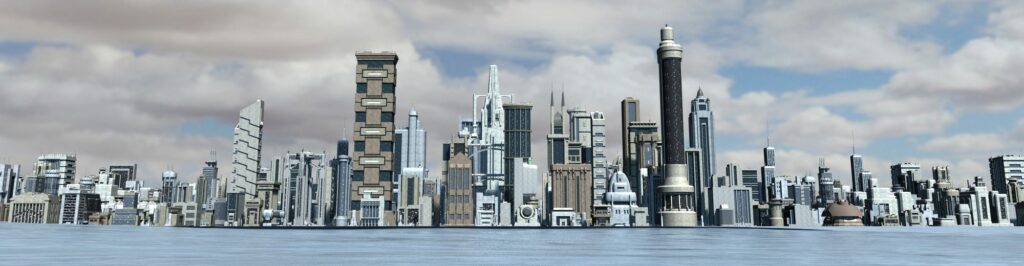
 Atlantica was one of the first megacities to be built. Like Europa and Pacifica (but not New Tokyo) the city was built on the remains of a previous city that had been destroyed in the comet impact of 1972. In Atlantica’s case it was built over the remains of New York and the surrounding area.
Being the first, the term Megacity was coined because unlike existing cities around the globe it is nearly 10 times bigger than average and had a population that reflect that. Modern construction techniques allowed for much of the inner to be built high-rise.
Transport
As well as catering for vehicles Atlantica has its own airport. It also has a raised railway system as well as an underground system for travel inside the city as well as normal rail links.
Home of the Heroes
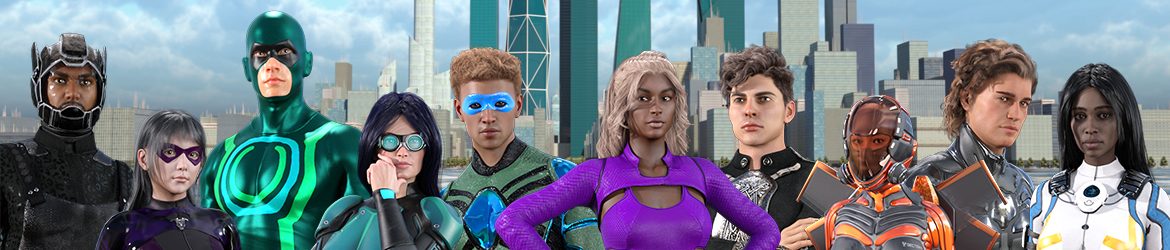
The city picked up the name from the fact that Team Zodiac established themselves in Atlantica. After they took down Black Shadow, ending their purge on Alphas, the area saw the first appearances of new heroes.
Districts
Waterfront / Wealth Districts (high prestige, business, luxury)
-
Harborfront – main business and finance hub.
-
Liberty Quay – civic plaza, cultural landmark zone.
-
Seawall Heights – luxury towers built into flood barriers.
-
Glassfront – gleaming skyscraper district with corporate offices.
-
North Docks – redeveloped shipping zone turned into upscale lofts.
-
South Marina – yacht harbors, leisure district.
-
Bayfront Gardens – green parks and museums along the waterline.
-
Battery Point – nod to old Battery Park, redeveloped into a high-end enclave.
Central / Mid-City Districts (commercial, mixed, middle-income)
-
Union Square District – rebuilt civic square and transport hub.
-
Central Commons – urban green space replacing Central Park.
-
Midline – bustling, middle-class mixed-use core.
-
Foundry Row – former industrial zone turned shops, housing.
-
Hudson Yards East – redeveloped commerce and condos.
-
The Arches – rebuilt bridge-adjacent neighborhood.
-
Transit Quarter – central interchange with rail and buses.
-
Brookfield Terrace – residential zone with mid-rise apartments.
-
Market Row – central retail, markets, and wholesale center.
-
Stonemill – adaptive reuse of factories into housing and creative spaces.
Outskirts & Inland Marginal Districts (poorer, dense, practical names)
-
Bayview – working-class housing near the old shoreline.
-
Southgate – inland gateway district.
-
Ironmarket – warehouses, workshops, street markets.
-
Riverside Downs – low-lying flood-prone community.
-
Hollowbrook – scarred by the calamity, rebuilt cheaply.
-
Union Terrace – planned worker blocks.
-
Northline – commuter-heavy district at edge of city transit.
-
Ashfield – rebuilt on disaster ruins.
-
Red Hook Yards – industrial-to-residential transition zone.
-
Old Ferry – inland resettlement where ferries once docked.
-
Flatwood – sprawling inland housing with minimal services.
-
Stonefield – low-rise neighborhoods built on reclaimed rubble.
-
Eastpoint – outer edge district on city’s expanding boundary.
-
Millhaven – poor quarter around an old mill complex.
Legacy / Historic Remnant Districts (memorials, ruins, substructure)
-
Oldline – former subway district, markets underground.
-
Echo Ward – preserved ruins and memorial site.
-
The Depths – sealed zones still dangerous.
-
Memorial Row – wide avenue lined with calamity memorials.
-
Liberty Grounds – site where old landmarks are preserved in partial ruins.
Reclaimed / Eco-Tech Districts (modern sustainable projects)
-
Greenpoint Arc – vertical gardens and midrise housing.
-
Solaris Park – solar farm and eco-tech neighborhood.
-
Verdant Row – experimental urban farming zone.
